



/ IN THIS BLOG
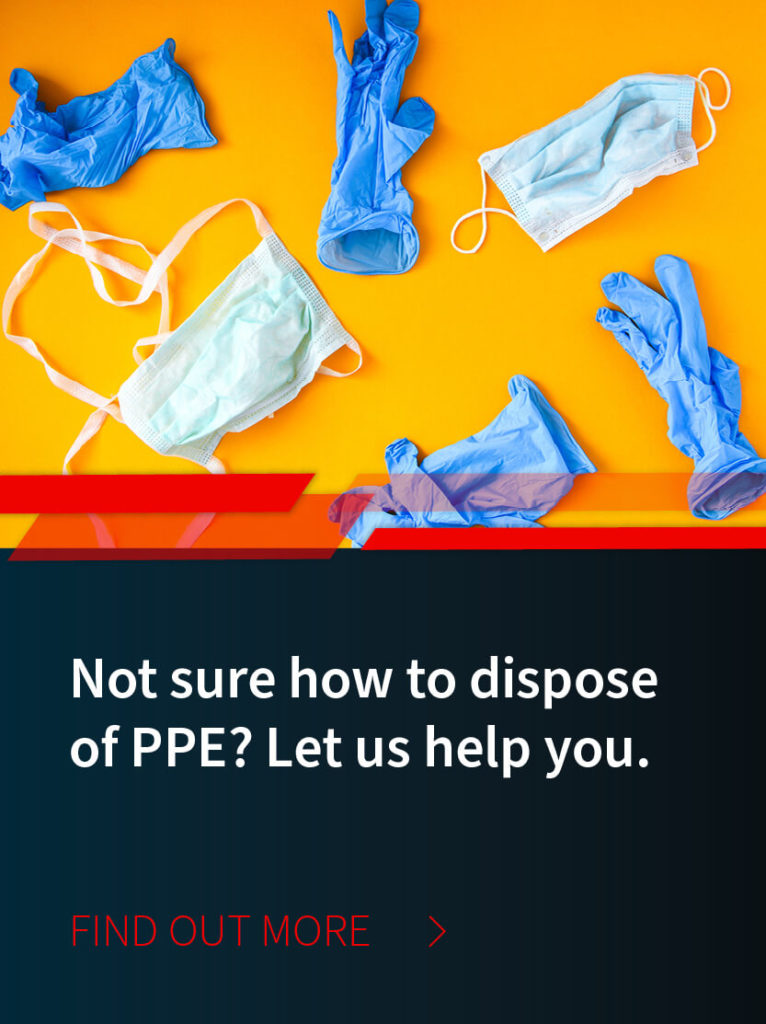
Contaminated PPE disposal may happen on a daily basis at your organization’s location. Every day, across hospitals, manufacturing plants, automotive shops, laboratories, and construction sites, workers remove gloves, gowns, respirators, and protective clothing that has contacted hazardous materials.
Beyond the ordinary uses, there’s also the emergency applications that require its own approach. For instance, when a chemical spill occurs, the absorbents and PPE used to manage it add another layer to the problem.
In both cases, this protective and clean-up material moves from ordinary to regulated waste when it comes into contact with substances categorized as hazardous. That means it’s subject to EPA and OSHA requirements and proper disposal becomes more nuanced depending on what the gear contacted and how much of it your facility generates.
Since contaminated PPE disposal is one of the most routinely mishandled compliance obligations in industrial and occupational settings, this is a subject you’ll want to get right. The consequences for improper handling range from regulatory fines and environmental liability to worker safety violations that could have been avoided with the right procedures in place.
01 / When It Comes to Contaminated PPE Disposal, the First Step is an Important One: Know Your Contaminant Before Anything Else
The single most important principle in contaminated PPE disposal is this: waste inherits the regulatory status of the contaminant it absorbed. A nitrile glove that touched motor oil is not the same disposal problem as one that contacted a chlorinated solvent, even though they may look identical in a waste bin.
Before any PPE or absorbent material is bagged, labeled, or moved, the contaminant needs to be identified and characterized. The Safety Data Sheet (SDS) for the substance involved is the starting point. It will indicate whether the material is flammable, toxic, corrosive, or reactive (the four characteristics the EPA uses to classify hazardous waste) and will often specify disposal requirements directly.
The biohazard versus chemical distinction matters here too. Biological contaminants, such as bloodborne pathogens, bodily fluids, infectious material, route to medical waste disposal streams. Chemical contaminants should be placed into hazardous waste streams. Mixing the two, or either one with general trash, is a compliance violation that significantly increases disposal costs and legal exposure.
One additional layer for facilities using common industrial solvents: absorbents that contact EPA-listed solvents like acetone, methanol, or toluene, may become listed hazardous waste regardless of the quantity absorbed. That classification carries stricter handling and manifesting requirements than characteristic hazardous waste alone.
02 / PPE Hazardous Waste Across Industries
Contaminated PPE and absorbent waste show up across sectors, but the contaminant type (and therefore the classification and disposal requirements) varies significantly by industry.
Manufacturing and Industrial Facilities
Routinely generate PPE hazardous waste saturated with solvents, acids, and process chemicals. The listed waste risk is particularly acute here, since many common industrial solvents fall under EPA F-list classifications that trigger stricter disposal requirements the moment they contact absorbent material.
Automotive Shops
Deal primarily with oils, fuels, and brake fluid. Used absorbent pads and shop rags soaked in petroleum products carry ignitability concerns and cannot be landfilled without proper treatment or disposal through a licensed hauler.
Construction Sites
Present a different challenge when PPE contaminated with lead dust, silica, or asbestos-containing materials requires handling under specific OSHA and EPA abatement protocols, separate from standard chemical waste streams.
Laboratories
May face both chemical and biological contamination depending on the work being performed, and sometimes both simultaneously. That crossover requires careful segregation to ensure waste enters the correct disposal stream.
Emergency Response and Remediation Operations
Generate high volumes of spill cleanup waste quickly, often under pressure. Proper manifesting and chain-of-custody documentation becomes especially critical in situations where large quantities of contaminated PPE and absorbents are produced in a short window.
03 / Immediate Segregation and Containment
This is a critical step that everyone in your organization needs to get right. The moment contaminated PPE or absorbent material is removed, it needs to go directly into the correct container. This means it can’t just be set aside to be dealt with later, nor should it be placed in a general waste bin. Remember, PPE hazardous waste and absorbent waste cannot be mixed with other waste streams. Mixing hazardous waste with regular trash is a compliance violation that can convert an otherwise manageable disposal situation into a costly remediation problem.
To properly segregate and contain the items, use color-coded, clearly labeled containers, such as red or biohazard-marked bins to handle biological waste. Yellow containers are typically designated for chemical-saturated PPE and absorbents. The labeling should identify the waste type and, where possible, the specific contaminant. This matters for when the waste is picked up by your hauler and when documentation is reviewed during any waste audit.
Finally, containers should be sealed and replaced at the 75% fill mark. Make sure not to overfill containers since this increases the risk of spillage, which further complicates clean-up efforts.
04 / Safe Removal and Packaging of Contaminated PPE
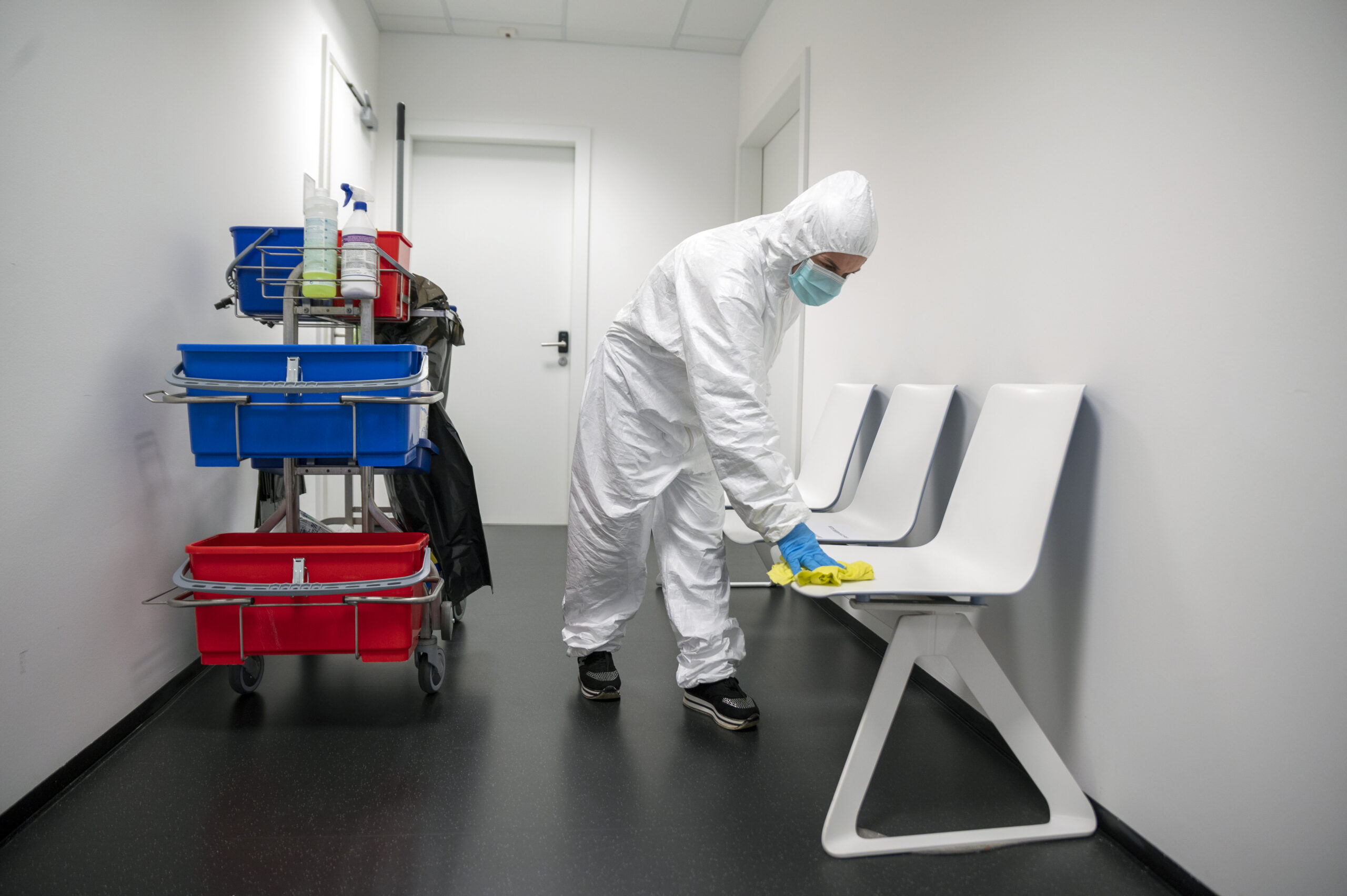
How someone removes contaminated PPE matters just as much as how it's disposed of. To prevent improper removal from transferring contamination from the gear to a worker, defeating the purpose of the PPE entirely, there are several steps to take each time PPE is removed. Proper doffing entails removing the most contaminated items first, working inward, and avoiding touching the exterior of any item with bare hands during the process. Gloves come off before gowns or aprons; eye protection and respiratory gear come off last. OSHA training should routinely cover this process so employees are reminded of proper procedure.
Once removed, PPE should be bundled inside-out to contain the contaminated surfaces and placed immediately into the designated waste container. Heavy-duty, leak-resistant bags are the baseline requirement as standard trash bags are not appropriate for PPE hazardous waste. Double-bagging is warranted when the waste involves highly toxic or volatile substances, or when there's any risk the primary bag could be punctured by sharp PPE components.
Absorbent materials, such as pads, socks, or loose granular absorbents, should be handled with fresh gloves and placed in the same appropriately labeled container as other chemical waste from the same spill event. Never consolidate absorbents from different spill events or different contaminants into a single bag without confirming compatibility.
05 / A Note on Absorbent Waste Disposal
Absorbents used during spill cleanup may sometimes be treated as an afterthought once the immediate spill is contained. This can be a huge compliance mistake as used absorbents are regulated waste the moment they contact a hazardous substance. Absorbent waste disposal carries specific requirements that go beyond standard PPE handling.
The EPA's free-liquid rule is the first consideration. Hazardous absorbents must not contain free liquids at the point of disposal. This means that saturated materials which could release liquid if compressed or tilted cannot be transported as-is. Depending on the substance involved and local regulations, that may mean wringing out, stabilizing, or solidifying the material before it can be packaged for transport.
Ignitability is the second major concern. Absorbents soaked in flammable liquids, such as fuels, solvents, and certain oils, pose a spontaneous combustion risk if stored improperly. Because of this fact, these materials should be placed in airtight, spark-proof metal containers and kept away from heat sources until pickup. Standard plastic bags or open containers are not appropriate when dealing with these types of liquids.
Finally, absorbents that contact EPA-listed solvents inherit listed waste status. This is an important point worth reiterating because it can catch a facility off guard. An absorbent pad used to clean up a toluene spill is not simply "used material." It is F-listed hazardous waste, subject to the same manifesting, storage, and disposal requirements as the solvent itself.
06 / Transport, Manifesting, and Finding the Right Disposal Partner for PPE Hazardous Waste
Once contaminated PPE and absorbents are properly packaged and labeled, final disposal requires a licensed hazardous waste hauler. Standard municipal waste services cannot legally accept this material, and attempting to dispose of it through regular trash pickup, even when the waste appears inert or the volume is small, can expose your facility to significant regulatory and financial liability.
When it comes to contaminated PPE and spill cleanup waste, the paper trail matters as much as the physical handling. A uniform hazardous waste manifest must accompany every shipment, documenting the waste type, quantity, point of origin, and receiving facility. That manifest is the chain-of-custody record that demonstrates compliant disposal if a facility is ever audited by the EPA or a state environmental agency. Manifests should be retained for a minimum of three years, though many facilities keep them longer as a matter of practice.
Choosing the right disposal partner simplifies the entire process. A full-service environmental waste management company handles classification support, proper containment materials, licensed transport, and compliant final disposal under one arrangement. This helps reduce the administrative burden on your internal safety and compliance teams while ensuring nothing falls through the cracks.
MCF Environmental Services provides contaminated PPE disposal and absorbent waste disposal services for facilities across industries. If you’re looking to close a compliance gap or be better prepared when the need arises, our team can help wherever you are in the process. Reach out to the MCF team to discuss your facility's waste stream and disposal requirements and gain the peace of mind that comes with full preparedness and compliance.
Robert Losurdo