

Safeguard Your Farmland
Protect your farmland from PFAS contamination with tailored solutions for soil, crops, and water.
Pickup, Transportation and Disposal of PFAs. For quick pricing, call and talk to an expert.

Safeguard Your Farmland
Protect your farmland from PFAS contamination with tailored solutions for soil, crops, and water.

Safe PFAS Management
We support fire inspectors in managing hazardous materials in high-risk facilities, ensuring safety and compliance.

Protect Runways & Communities
Airports are key PFAS sources. We manage PFAS in fire systems and materials, ensuring compliance and safety.


PFAS chemicals have been in use for over 70 years. From providing stain and water resistance to making up a key element of firefighting foam, the chemicals’ unique ability to resist being broken down is also what makes them a danger and a challenge to address. It wasn’t until the 1990s that the EPA and independent researchers started sounding the alarm on the potential negative health impacts of PFAS. That’s also when the first PFAS-related lawsuits began and pressure mounted for regulations on both the federal and state level.
In 2006 the EPA launched the PFOA Stewardship Program to work with many of the largest manufacturers of these chemicals to work to reduce and eventually eliminate emissions, a goal which was met by those involved. Some preliminary restrictions and recommendations were put in place, but nothing that addressed on a large-scale the growing pervasive use of these “forever chemicals.”
2024 was a turning point in PFAS regulation, spurred on by the EPA’s four-year PFAS Strategic Roundup, it saw new limits on PFAS levels in drinking water, marking a major step for federal PFAS regulations. Eleven states also currently have a Maximum Contaminant Levels (MCLs) while Maryland, New Hampshire, Rhode Island, Vermont, and Virginia all have measures for further PFAS regulations regarding water. Known as the Final PFAS National Primary Drinking Water Regulation, it illustrates a major step by the EPA to enforce limits on PFAS in drinking water, enacting limits for five PFAS chemicals, commonly referred to as GenX Chemicals along with mixtures of other PFAS chemicals. The Toxic Substances Control Act (TSCA) has also played a key role in limiting the manufacture and importation of PFAS chemicals over the past two decades. One of the most recent updates, the Significant New Use Rule (SNUR), prevents the manufacturing and processing of “inactive PFAS without EPA review.” This applies to a total of 329 PFAS chemicals.

Specialized landfills designed to handle hazardous waste ensuring that it does not contaminate the environment.

A high-temperature method designed to destroy PFAS compounds effectively. Incineration ensures the breakdown of these persistent chemicals into less harmful substances, helping to minimize environmental impact.
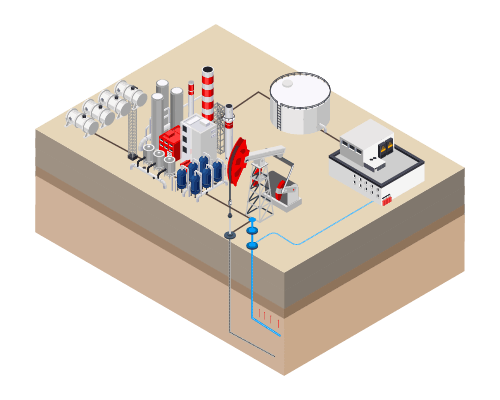
Injecting hazardous materials deep underground into isolated rock formation, keeping the waste far from groundwater sources.
States are slowly adding restrictions, bans, and regulation to a variety of industries as new research emerges. It’s important to remain up-to-date on changes to local, state, and federal regulations, particularly when it comes to PFAS chemicals, since this is such a developing and evolving environmental and health issue. Every industry which utilizes PFAS should expect further changes. This makes it even more important to partner with a waste management service to ensure your business remains compliant.
Here is a brief overview of some of the most recent proposed and enacted bans or restrictions on a state level. This list serves as a reference, but any business should do their own research or rely on a trusted waste partner to guide them through the most up-to-date developments.
The above list is by no means comprehensive, as new legislation will continuously be introduced and laws added. In just 2023 alone, over 30 states introduced bills and in that year alone 44 PFAS-related laws were enacted.